
Midalidare’s Grape Varieties: Chardonnay – The variety and the terroirs

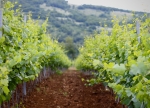
Chardonnay is the world’s most popular white wine. It is made from green-skinned grapes that adapt to a variety of climates. Chardonnay can be crisp and clean, or rich and oaky. There is something for everyone, which is why Chardonnay is so beloved.
The variety is named after a village in Bourgogne called Chardonnay and the Romans called Cardonnacum (which translates into ‘the area of thistles’, Chardon being French for thistle too). The historic legend in France goes that Chardonnay owes its popularity to the wife of Emperor Charlemagne who ordered that white wine grapes be planted in Burgundy because she was fed up with the red wine staining her husband’s beard while he was drinking!
Origin
For much of its history, a connection was assumed between Chardonnay and Pinot Noir or Pinot Blanc. In addition to being found in the same region of France for centuries, ampelographers noted that the leaves of these plants have near-identical shape and structure. Chardonnay's true origins were further obscured by vineyard owners in Lebanon and Syria, who claimed that the grape's ancestry could be traced to the Middle East, from where it was introduced to Europe by returning Crusaders. Another theory stated that it originated from an ancient indigenous vine found in Cyprus.
Modern DNA fingerprinting research now suggests that Chardonnay is the result of a cross between the Pinot Noir and Gouais Blanc (Heunisch) grape varieties. The Romans are thought to have brought Gouais blanc from Croatia. The Pinot of the French aristocracy grew near the Gouais blanc, giving the two ample opportunities to interbreed. Since the two parents were genetically distant, many of the crosses showed hybrid vigour and were selected for further propagation. These "successful" crosses included Chardonnay and siblings such as Aligote, Aubin Vert, Auxerrois Blanc, Bachet Noir, Beaunoir, Franc Noir de la-Haute-Saône, Gamay Blanc Gloriod, Gamay Noir, Melon, Knipperlé, Peurion, Roublot, Sacy, and Dameron.
Clones
Numerous clonal varieties of Chardonnay could be found in vineyards throughout France; most of these were developed at the University of Burgundy in Dijon. New World varieties include the 'Mendoza' clone, which produced some of the early California Chardonnays. Chardonnay has served as parent to several French American hybrid grapes, as well as crossings with other V. Vinifera varieties. Examples include the hybrid Chardonel, which was a Chardonnay and Seyval Blanc. Mutations of the Chardonnay grape include the rare pink-berried 'Chardonnay Rose'; also 'Chardonnay Blanc Musqué', which produces an intensely aromatic wine.
Chardonnay in Mogilovo
Chardonnay is one of the most popular grape varieties in Bulgaria as well. The plantations in Mogilovo are situated at Prisovete and Shipkata vineyards, near the Eastern winery. Varietal and blended PGI wines are produced by Midalidare, blends include Viognier, Sauvignon Blanc and Semillon: 42/25 Chardonnay & Viognier & Sauvignon Blanc, Carpe Diem White, Angel’s Share Chardonnay, Calista Chardonnay.
The pearls of Midalidare, made entirely according to traditional sparkling winemaking and highly appreciated both internationally and locally, are also produced of Chardonnay grapes.
Explore our blog
- Blend & Trend: Popular wine blends by Midalidare - Trendy blending styles
- Classic wine blends - Wine Classics from the Old World
- Sauvignon Blanc vs Chardonnay - Two great white varieties side by side
- Aromatic white grapes - Scent explosion in a glass of white wine
- Carbonic Maceration - Fermentation technique in a completely anaerobic atmosphere
- Cane Cut technique - New name for an old tradition
- Vine pruning celebrations around the world - How they celebrate the growing season beginning in different countries
- Sparkling Wine Guide - Sparkling winemaking - Methods for sparkling winemaking
- Sparkling Wine Guide - Traditional sparkling winemaking - The Champagne method
- Sparkling wine guide – Food pairing - Champagne & Sparkling wine food pairing
- Sparkling Wine Guide: Pas Dosé - Sparkling wine with no added sugar
- Sparkling Wine Guide: Blanc de Noirsр - A full-bodied, heady Sparkling
- Wine & Glass pairing: Do specific wine glasses make a difference? - Do specific wine glasses make a difference?
- Wine & Glass pairing: Guide to different types of wine glasses with stem - Anatomy - Part 1: Anatomy of a wine glass
- Wine & Glass pairing: Guide to different types of wine glasses with stem - Part 2: Different types of wine glasses
- Wine & Glass pairing: Rose Wine Glasses - Flared Lip Rose Wine Glass
- Wine & Glass pairing: Rose Wine Glasses - Slight Taper Rose Glass
- Wine & Glass pairing: White Wine Glasses - Sauvignon Blanc Wine Glass
- Wine & Glass pairing: White wine glasses - Unoaked Chardonnay Wine Glass
- Wine & Glass pairing: White wine glasses - Оaked Chardonnay Wine Glass
- Wine & Glass pairing: White wine glasses - Riesling Wine Glass
- Wine & Glass pairing: Red wine glasses - Cabernet/Merlot Wine Glass
- Wine & Glass pairing: Sparkling Wine Glasses - Basic types of Champagne and Sparkling wine glasses
- Wine & Glass pairing: Red wine glasses - Old-world style Syrah
- Pinot Noir in Central Otago - What sets Central Otago's Pinot Noir apart from other regions?
- Midalidare’s grape varieties: Mourvedre - Part 1: The variety
- Midalidare’s grape varieties: Mourvedre - Part 2: The terroirs
- Midalidare’s grape varieties: Mourvedre - Part 3: The wines
- Midalidare’s grape varieties: Mourvedre - Part 4: Serving and storage
- Midalidare’s grape varieties: Mourvedre - Part 5: Food pairing
- Midalidare’s grape varieties: Sauvignon Blanc in a nutshell - Part 1: Essential information about Sauvignon Blanc
- Midalidare’s grape varieties: Sauvignon Blanc - The variety and the terroirs - Part 2: Sauvignon Blanc - Specifics of the variety and appropriate regions
- Midalidare’s grape varieties: Merlot in a nutshell - Part 1: Essential information about Merlot
- Midalidare’s grape varieties: Merlot - The variety and the terroirs - Part 2: Merlot - Specifics of the variety and appropriate regions
- Midalidare’s grape varieties: Tannat in a nutshell - Part 1: Essential information about Tannat
- Midalidare’s grape varieties: Tannat – The variety and the terroirs - Part 2: Tannat – Specifics of the variety and appropriate regions
- Midalidare’s grape varieties: Tannat – Wines & winemaking - Part 3: Tannat – Styles of wines and winemaking techniques
- Midalidare’s grape varieties: Tannat - Wine & dine - Part 4: How to serve, store and pair Tannat wine with food
- Midalidare’s grape varieties: Syrah in a nutshell - Part 1: Essential information about Syrah
- Midalidare’s grape varieties: Malbec in a nutshell - Part 1: Essential information about Malbec