Midalidare’s grape varieties: Sauvignon Blanc - The variety and the terroirs

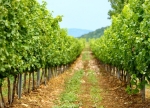
Sauvignon Blanc is a white-wine green-skinned grape variety from France. The variety traces its origins to western France in the Loire Valley and Bordeaux Regions. The grape most likely gets its name from the French words Sauvage ("wild") and Blanc ("white") due to its early origins as an indigenous grape in Southwest France. It is possibly a descendant of Savagnin. The exact origin is still unknown.
There are numerous clones of Sauvignon Blanc in California, France, Italy, and Chile.
In the 19th century, plantings in Bordeaux were often interspersed with Sauvignon Vert (in Chile, known as Sauvignonasse) as well as the Sauvignon Blanc pink mutation Sauvignon Gris. Prior to the phylloxera epidemic, the insect plague which devastated French vineyards in the 19th century, these interspersed cuttings were transported to Chile where the field blends are still common today. Despite the similarity in names, Sauvignon blanc has no known relation to the Sauvignon rose mutation found in the Loire Valley of France.
Vines grow vigorously in many soil types in both cool and warm regions; it is generally advisable to avoid highly fertile and deep soils.
A relatively robust, vigorous vine (which explains its popularity with viticulturists), Sauvignon adapts readily to all kinds of growing environments. Because it ripens early, it can be grown in relatively cool climates – its Loire homeland being the most obvious example – while its naturally high acidity allows it to retain a level of freshness even in warmer areas. However, to achieve the true, forward zing that best characterizes Sauvignon Blanc wine, a cooler terroir is needed, ideally with persistent bright sunshine and a dry harvest period.
Strange as it may seem, bright, green Sauvignon Blanc has much in common with dark-skinned Cabernet Sauvignon, and not just in the name and region of origin. The two varieties are, in fact, genetically related; Sauvignon became the parent to Cabernet Sauvignon after a natural crossing with Cabernet Franc in an 18th-Century Bordeaux vineyard. Both parent and offspring have now become two of the most widely planted vine varieties in the world.
Terroirs
Sauvignon Blanc is grown all over the world, yet it is most famous from the Loire Valley and Bordeaux, France; Marlborough, New Zealand; Casablanca, Chile; and Napa Valley, California.
Loire Valley
The focal point of Sauvignon Blanc production in the Loire Valley, both in terms of quality and quantity, is the Central Vineyards. Home to the renowned appellations of Sancerre and Pouilly-Fume it is here that the distinctive aromatics are perhaps exhibited at their best thanks, in part, to the mineral-rich, limestone soils but also to the climate. In the twentieth century, Sancerre became incredibly popular in Paris bistros and bars because of its ability to go extremely well with or without food. Sancerre wines were easy to drink and the public fell in love.
The climate of the valley is particularly suited to slowing the ripening on the vine, allowing the grape more time to develop a balance between its acidity and sugar levels; key to the development of intense aromas. Terroir plays an important role here; the chalk and kimmeridgean marl of Sancerre and Pouilly-Fume producing wines of richness and complexity.
Bordeaux
While famed for its production of age-worthy red wines, Bordeaux also produces some equally note-worthy dry and sweet white wines with sauvignon at their base. The focus of dry white wine production is on the region of Entre-Deux-Mers, a parcel of land "between the two seas" of the Garonne and Dordogne rivers, along with Graves and Pessac-Leognan, located on the left bank. Sauvignon appears in its luscious, sweet form in the world-famous appellations of Sauternes and Barsac.
From the nightlife of Paris, Sauvignon Blanc traveled around the globe and found another champion in New Zealand, who would finally make the grape’s name known worldwide. In the 1980s, few had still heard the actual name Sauvignon Blanc, even though many were drinking it regularly every time they drank Sancerre. It was then that New Zealand wines hit the international market, debuting wines that were bright, crisp, refreshing and, best of all, incredibly affordable.
New Zealand
While traditionalists might argue that the Loire Valley is sauvignon's heartland, New Zealand's winemakers might argue that it is they who have really put Sauvignon Blanc on the map.
New Zealand has taken this white grape variety and put its own brilliantly zesty stamp on it, creating a wine style that had not really been seen before and that many now attempt to emulate. The best tends to be unoaked, combining delicious, tropical fruit flavours with lively, fresh-tasting acidity and directness. South Island's Marlborough region sets the benchmark with its pungently aromatic wines with distinctive gooseberry aromas and flavours. In recent years there has been much interest in Marlborough's exciting sub-regions as growers learn more about the different terroirs and skillfully produce wines to express these. The Awatere River Valley is Marlborough's coolest valley is creating very attractive and delicate Sauvignons.
Australia
The key to quality Sauvignon Blanc from Australia is temperature; the cooler the better. The isolated region of Western Australia provides just such conditions in Margaret River in particular. Here the cooling influence of the southern Indian Ocean tempers the heat creating a climate not too dissimilar to that of Bordeaux. And like Bordeaux, the region produces classy Graves-style whites from Sauvignon-Semillon blends. Straight varietal wines are less common but when produced make for wines that are softer and more subtle than their Kiwi counterparts yet with more tropical fruit flavours than one might find in Sancerre or Pouilly-Fume.
South Africa
The best regions for sauvignon production in South Africa are also those cooled by the oceans. Constantia, located on the Cape Peninsula, is perfectly suited; virtually encircled by two oceans, it has a strong, maritime climate. Tropical fruit flavours are matched with pungent, elderflower aromas along with sauvignon's distinctive herbaceous quality.
Stellenbosch and Elgin, both east of Cape Town, gain their cool climate from both altitude (hillside vineyards) and a dominant sea breeze. The sauvignons are some of the ripest, in terms of fruit flavour, with vibrancy and acidity to match.
Chile
With the Atacama Desert in the north and Antarctica to the south, Chile encompasses every climate type on earth. Its saving grace, in terms of vine growing, comes in the form of the Pacific Ocean. The Humboldt current brings with it rolling sea fogs and breezes that, where the mountains are low enough, are able to move inland, bringing welcome relief for the ripening grapes.
Surprisingly, the coolest regions are found in the north, where this oceanic influence is at its greatest. The two valleys of Elqui and Limari, with their limestone soils, produce a Sauvignon more akin to its cousin from the Loire Valley. Refreshing and crisp with intense aromas of gooseberry and elderflower, this style sees a departure from the more tropical flavours of Australia and South Africa. The cool nighttime temperatures help retain the marked acidity. Leyda Valley, south of the Casablanca wine region, provides equally fresh wines. The gooseberry and nettle aromas and flavours, more common in the northern hemisphere, are enhanced by the cool growing environment.
North America
In North America, California is the leading producer of Sauvignon Blanc with plantings also found in Washington state and on the Niagara Peninsula and Okanagan Valley in Canada. Sauvignon Blanc is also grown in small regions in Ohio along Lake Erie and the Ohio River. Both oaked and unoaked Sauvignon Blanc wines have been marketed under the name Fume Blanc. California Sauvignon Blancs tend to fall into two styles. The New Zealand-influenced Sauvignon Blanc have more tropical fruit undertones with citrus and passion fruit notes. The Mondavi-influenced Fume Blanc are more round with melon notes.
Bulgaria
Sauvignon Blanc is widely planted in Bulgaria due to its adaptability. Most of the plantations are situated in the Danubian Plain or North Bulgarian region encompasses the south banks of the Danube and the central and western parts of the Danubian Plain. The climate of the area is temperate continental, has a hot summer and many sunny days a year. The Black Sea region is characterized by long and mild autumns that are a favourable condition for the accumulation of sugars to make fine white wine and is also suitable for Sauvignon Blanc. Thracian Lowlands and its Mediterranean climate with mild, rainy winters and warm, dry summers is another great Bulgarian terroir for Sauvignon Blanc. The variety is also grown in Rose Valley.
The plantations in Mogilovo are situated at Prisovete and Shipkata vineyards, near the Eastern winery. Varietal and blended PGI wines are produced by Midalidare, blends include Pinot Gris, Chardonnay, Semillon and Viognier: 42/25 Sauvignon Blanc, 42/25 Chardonnay & Viognier & Sauvignon Blanc, Carpe Diem White, Silver Angel Sauvignon Blanc, Synergy Sauvignon Blanc & Pinot Gris, Midalidare Sauvignon Blanc & Semillon, Midalidare Sauvignon Blanc Premium Selection, Winemaker's Choice Sauvignon Blanc Barrel Fermented.
Other regions
Sauvignon Blanc is grown also in Northeastern Italy, Central Spain, Hungary, Romania, Moldova.
Similar varieties: Verdejo, Albarino, Colombard, Grüner Veltliner, Verdicchio, Vermentino, Tocai Friulano, Savignan (rare), Traminer, Sauvignon Vert (rare)
Synonyms: Fume Blanc (USA), Muskat-Silvaner (Austria), Feigentraube (Germany), Sauvignon (Italy)