
Central Otago: Wine region

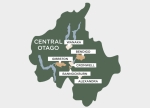
Otago is an area located in the inland part of the Otago region in the South Island of New Zealand. The motto for the area is "A World of Difference" Vast open plains and rugged landscapes make it one of the most scenic wine regions in New Zealand. It's also home to some of the best Pinot Noir in the world.
Hugged by mountains and interlaced with lakes and deep river gorges, the vineyards in Central Otago are truly spectacular. Here, the cool climate combined with glacially derived soils, means vineyards produce a highly elegant Pinot Noir and some quietly impressive white wine varietals and the occasional pink rosé. All of the main winegrowing sub-regions lie within close reach, with the distinctive mountainous terrain providing each with a unique climate, aspect and altitude.
History
Central Otago’s wines, and in particular its Pinot Noir, have become very well known in a relatively short time. The first vines were planted in the 1860s when miners settled in the region following the Central Otago Gold Rush. However – due to Central Otago’s isolated location – no commercial plantings succeeded until over a century later.
By the 1950s vines were being considered again and the “pioneers” arrived in the late 70s. These pioneers included Chard Farm, Rippon, Black Ridge and Gibbston Valley, who all planted in the more southerly regions of Central Otago (the coolest and most difficult ones to produce wine in). Everyone thought they were off their heads to plant vines at such a southerly latitude and in such a cool climate. However, their perseverance paid off. The hardy pioneers were few but their success in making wine further south than anyone had ever imagined led to another wave of wine production.
The second phase in Central Otago is considered to be the mid-90s through to 2005. This also happens to be when most vines in Central Otago were planted. Modern winemaking technology, consultant winemakers and heavier wallets meant this wave of producers had an even bigger impact on the international stage. Wine production increased more than tenfold within a decade. Since then, there’s been a bit of slowdown in Central Otago, although today we are in what is considered the third phase. It is slower, more sustainable and perhaps wiser.
Climate & Landscape
There are few wine regions in New Zealand, and perhaps the world, quite as striking as Central Otago. Snowcapped mountains can be found almost 360° around you and there are rushing rivers and canyons aplenty. It’s a dramatic landscape, wild and untamed, apart from the neat rows planted in vineyards and orchards. No surprise then than Central Otago was one of the key destinations where Lord of the Rings was filmed.
The dramatic landscape and mountain chains surrounding the Central Otago wine region also lend themselves to great grape growing. Central Otago has the closest to a continental climate that can be found in New Zealand’s islands. It is protected from any maritime influence by the surrounding mountain chains, which create a rain shadow and prevent any wet and humid fronts coming in. This rain shadow, in fact, makes it the driest of all the wine regions in New Zealand – a major plus for healthy grape growing.
It is also a very sunny climate in the summer. The dry weather means there’s little cloud cover and, at this southerly latitude, the summer has long days with many hours of sunlight. In the summer it can still be light at 10pm. There are high levels of UV in Central Otago and the grape skins are thicker in response. Because of this, the Pinot Noir from Central Otago tends to have a much deeper and darker colour than usual.
During the winter Central Otago is cold and snowy, while summer is hot and dry. In the summer, the diurnal range is also pretty extreme – day time temperatures in the summer can reach up to 30°C while in the evening they can dip into single digits. These extreme contrasts, unfortunately, also mean that Central Otago is one of the more frost-prone wine regions. Anti-frost wind machines and sprinklers are found in almost every vineyard.
Rainfall in Central Otago is 340-600mm a year (depending on the region). Drip irrigation is essential and irrigation water is all from snowmelt from the Southern Alps.
There can be a strong Nor’westerly wind, which helps keep vines and grapes dry and healthy. While the season is relatively short in Central Otago, the long daylight hours in the summer help make up for the shorter ripening
Soils
There is a variety of soils in the Central Otago wine region, depending on the sub-region or even the vine location within the same vineyard. Soils are usually well-draining with significant quantities of mica and schist, as well as silty loam. There’s also pedogenic lime here, which is similar to limestone but it is a process that is developed over thousands of years by pressure (rather than marine deposits, which form limestone).
Pallic Soils, the third-most extensive soil order, is covering 12% of New Zealand. They are often formed in loess, a uniform silt-dominated material that is blown off river floodplains and deposited onto the surrounding landscape. Thus, Pallic Soils often suffer winter wetness, as water perches above the fragipan, and are also prone to summer drought. Subsoils are pale-coloured (“pallic”) because of their low contents of iron oxides and, in some cases, gleying.
The soils in the hills are much older than those on the valley floor in Central Otago, which has been shaped by glaciations, meaning the valley floor soils tend to be of a light, sandy, gravely-schist base. All of this diversity means that there is quite a palate for vine-growers to play with, including certain manmade soils following gold extraction.
Central Otago wine subregions
Gibbston: Situated east of Queenstown along the spectacular Kawarau Gorge, Gibbston is the highest sub-region, with its cooler climate and north-facing hillside vines ripen later than neighbouring sub-regions, giving lighter though still intense wines.
Bannockburn: On the south bank of the Kawarau River, at the southern terminus of the Cromwell Valley, the vineyards occupy one of the warmest, driest sites in the region. Harvest can be up to a month ahead of other sub-regions, and the wines produced are highly distinctive and complex.
Cromwell, Lowburn and Pisa: This area is located on the western side of Lake Dunstan stretching north for some 25km from the township of Cromwell. The majority of plantings are situated on the lower terraces and valley floor running parallel to the snow-capped Pisa mountain range producing seductive wines. There, on Lake Dunstan's steep east bank, is located Stag's Run vineyard – the home of Midalidare New Zealand Pinot Noir.
Bendigo: Northeast of Cromwell, Bendigo has vines planted on gentle north facing slopes. Wide-scale plantings on stony soils capture the extreme climates hot summer sun and cold clear nights.
Wanaka: A couple of mountain ranges and 80km north of Queenstown, beautiful Wanaka is cooler and slightly wetter than the rest of the region. The lake provides welcome reflected radiation and mitigates frost producing delicate and vivid wines.
Alexandra: The southerly sub-region, the climate is dry and runs to extremes in both summer and winter. The marked daily climatic variations right up to harvest give vividly varietal, aromatic, finely structured wines. Central Otago’s first vineyard was planted here in 1864.
- Marlborough: Wine Region - History, climate, viticulture and sub-regions of Marlborough
- Marlborough: Southern Valleys - The home of Midalidare New Zealand Sauvignon Blanc
- Marlborough: Grapes and Wines - Specifics of the varieties and characteristics of the wines
- Marlborough: Sauvignon Blanc - What sets Marlborough's Sauvignon Blanc apart from other regions?
- Central Otago: Cromwell - The home of Midalidare New Zealand Central Otago Stag’s Run Pinot Noir
- Central Otago: Grapes and Wines - Specifics of the varieties and wines characteristics
- Pinot Noir in Central Otago - What sets Central Otago's Pinot Noir apart from other regions?
Explore our blog
- Blend & Trend: Popular wine blends by Midalidare - Trendy blending styles
- Classic wine blends - Wine Classics from the Old World
- Sauvignon Blanc vs Chardonnay - Two great white varieties side by side
- Aromatic white grapes - Scent explosion in a glass of white wine
- Carbonic Maceration - Fermentation technique in a completely anaerobic atmosphere
- Cane Cut technique - New name for an old tradition
- Vine pruning celebrations around the world - How they celebrate the growing season beginning in different countries
- Sparkling Wine Guide - Sparkling winemaking - Methods for sparkling winemaking
- Sparkling Wine Guide - Traditional sparkling winemaking - The Champagne method
- Sparkling wine guide – Food pairing - Champagne & Sparkling wine food pairing
- Sparkling Wine Guide: Pas Dosé - Sparkling wine with no added sugar
- Sparkling Wine Guide: Blanc de Noirs - A full-bodied, heady Sparkling
- Wine & Glass pairing: Do specific wine glasses make a difference? - Do specific wine glasses make a difference?
- Wine & Glass pairing: Guide to different types of wine glasses with stem - Anatomy - Part 1: Anatomy of a wine glass
- Wine & Glass pairing: Guide to different types of wine glasses with stem - Part 2: Different types of wine glasses
- Wine & Glass pairing: Rose Wine Glasses - Flared Lip Rose Wine Glass
- Wine & Glass pairing: Rose Wine Glasses - Slight Taper Rose Glass
- Wine & Glass pairing: White Wine Glasses - Sauvignon Blanc Wine Glass
- Wine & Glass pairing: White wine glasses - Unoaked Chardonnay Wine Glass
- Wine & Glass pairing: White wine glasses - Оaked Chardonnay Wine Glass
- Wine & Glass pairing: White wine glasses - Riesling Wine Glass
- Wine & Glass pairing: Red wine glasses - Cabernet/Merlot Wine Glass
- Wine & Glass pairing: Sparkling Wine Glasses - Basic types of Champagne and Sparkling wine glasses
- Wine & Glass pairing: Red wine glasses - Old-world style Syrah
- Midalidare’s grape varieties: Mourvedre - Part 1: The variety
- Midalidare’s grape varieties: Mourvedre - Part 2: The terroirs
- Midalidare’s grape varieties: Mourvedre - Part 3: The wines
- Midalidare’s grape varieties: Mourvedre - Part 4: Serving and storage
- Midalidare’s grape varieties: Mourvedre - Part 5: Food pairing
- Midalidare’s grape varieties: Sauvignon Blanc in a nutshell - Part 1: Essential information about Sauvignon Blanc
- Midalidare’s grape varieties: Sauvignon Blanc - The variety and the terroirs - Part 2: Sauvignon Blanc - Specifics of the variety and appropriate regions
- Midalidare’s grape varieties: Chardonnay - Chardonnay in a nutshell - Part 1: Essential information about Chardonnay
- Midalidare’s grape varieties: Chardonnay - The variety and the terroirs - Part 2: Chardonnay - Specifics of the variety and appropriate regions
- Midalidare’s grape varieties: Merlot in a nutshell - Part 1: Essential information about Merlot
- Midalidare’s grape varieties: Merlot - The variety and the terroirs - Part 2: Merlot - Specifics of the variety and appropriate regions
- Midalidare’s grape varieties: Tannat in a nutshell - Part 1: Essential information about Tannat
- Midalidare’s grape varieties: Tannat – The variety and the terroirs - Part 2: Tannat – Specifics of the variety and appropriate regions
- Midalidare’s grape varieties: Tannat – Wines & winemaking - Part 3: Tannat – Styles of wines and winemaking techniques
- Midalidare’s grape varieties: Tannat - Wine & dine - Part 4: How to serve, store and pair Tannat wine with food
- Midalidare’s grape varieties: Syrah in a nutshell - Part 1: Essential information about Syrah
- Midalidare’s grape varieties: Malbec in a nutshell - Part 1: Essential information about Malbec
- Midalidare’s grape varieties: Malbec – The variety and the terroirs - Part 2: Malbec – Specifics of the variety and appropriate regions
- Midalidare’s grape varieties: Malbec – Wines & winemaking - Part 3: Malbec – Styles of wines and winemaking techniques
- Midalidare’s grape varieties: Malbec - Wine & dine - Part 4: How to serve, store and pair Malbec wine with food