
Midalidare’s Grape Varieties: Malbec – Wines & Winemaking

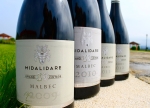
How Malbec Wine Is Made?
Malbec is a thick-skinned grape that thrives in sunny climates and cold nights, producing wines rich in color and body. The wines are known for their rich pigment, dark fruit flavors, and velvety texture.
During fermentation, winemakers extract tannin structure and pigment from the skins, then often age the wine in oak barrels to add cocoa powder, vanilla, and sweet tobacco tones.
Some producers blend Malbec with Petit Verdot or Cabernet Franc to enhance complexity, while others highlight its pure varietal power — a fruit-forward, full-bodied wine with balanced acidity and smooth texture.
Malbec is a grape variety offering a rich palette of flavors during tasting. Its fruity profile is indeed particularly appealing with notes reminiscent of plum, blackberry, or even black cherry.
In addition to this fruity aspect, Malbec can also present spicy flavors such as pepper, graphite, or even licorice.
As a general rule, Malbec cuvées display beautiful acidity, moderately powerful tannins and an intense aromatic profile. However, when grown in cool climate vineyards such as those in the Loire, Malbec can then produce wines with lighter profiles featuring slightly herbaceous flavors.
Malbec is capable of producing very diverse wines, depending above all on the terroirs and the winemaker’s choices. Some will be focused on fruit and thus intend to be enjoyed young, while others will be great powerful wines offering an outstanding aging potential.
Malbec tasting notes in general
The Malbec taste is defined by dark fruit flavors, smooth tannins, and a long, plush finish. You'll often find notes of black cherry, black plum, red plum, and blueberry, with undertones of violet flowers, cocoa powder, and sweet tobacco.
Through oak aging, Malbec develops tasting notes of vanilla, black pepper, and smoky flavors like mocha and roasted coffee. Its moderate tannin and higher acidity (especially in French versions) keep the wine balanced and food-friendly.
Malbec Tasting Notes Snapshot:
- Main fruit flavors: Black cherry, blackberry, red plum
- Secondary notes: Cocoa powder, vanilla, violet flowers, black pepper
- Finish: Savory and smooth, with a hint of sweet tobacco or smoky spice
Malbec Tasting Notes by Region
Argentina: The main fruit flavors in a glass of Argentine Malbec are blackberry, plum, and black cherry. The nuanced flavors offer milk chocolate, cocoa powder, violet flowers, leather, and, depending on the amount of oak aging, a sweet tobacco finish.
France: While Argentine Malbec is fruit forward, Malbec from France is quite the opposite. From the Cahors region, it is leathery, with flavors of tart currant, black plum, and savory bitterness often described as green at the start. French Malbecs, from the Loire and Cahors, have higher acidity, which attributes to flavors described as black pepper and spice. Because of their moderate tannin and acidity with lower alcohol, French Malbec wines tend to age longer.
Bulgaria: Bulgarian Malbec is often characterized by aromas of red fruits, tobacco and woody notes.
Mogilovo, Thracian Lowlands, Bulgaria: The terroir in Midalidare, where Malbec is grown, combines characteristics from both France and Argentina. The intense aromas are dominated by plum and black cherry, black pepper, savory and jamon. As a result of the climatic and soil conditions of the Daboovets vineyard, the wine is high in acidity and thus has an exceptional aging potential.
- Midalidare’s grape varieties: Malbec in a nutshell - Part 1: Essential information about Malbec
- Midalidare’s grape varieties: Malbec – The variety and the terroirs - Part 2: Malbec – Specifics of the variety and appropriate regions
- Midalidare’s grape varieties: Malbec - Wine & dine - Part 4: How to serve, store and pair Malbec wine with food
Explore our blog
- Blend & Trend: Popular wine blends by Midalidare - Trendy blending styles
- Classic wine blends - Wine Classics from the Old World
- Sauvignon Blanc vs Chardonnay - Two great white varieties side by side
- Aromatic white grapes - Scent explosion in a glass of white wine
- Carbonic Maceration - Fermentation technique in a completely anaerobic atmosphere
- Cane Cut technique - New name for an old tradition
- Vine pruning celebrations around the world - How they celebrate the growing season beginning in different countries
- Sparkling Wine Guide - Sparkling winemaking - Methods for sparkling winemaking
- Sparkling Wine Guide - Traditional sparkling winemaking - The Champagne method
- Sparkling wine guide – Food pairing - Champagne & Sparkling wine food pairing
- Sparkling Wine Guide: Pas Dosé - Sparkling wine with no added sugar
- Sparkling Wine Guide: Blanc de Noirs - A full-bodied, heady Sparkling
- Wine & Glass pairing: Do specific wine glasses make a difference? - Do specific wine glasses make a difference?
- Wine & Glass pairing: Guide to different types of wine glasses with stem - Anatomy - Part 1: Anatomy of a wine glass
- Wine & Glass pairing: Guide to different types of wine glasses with stem - Part 2: Different types of wine glasses
- Wine & Glass pairing: Rose Wine Glasses - Flared Lip Rose Wine Glass
- Wine & Glass pairing: Rose Wine Glasses - Slight Taper Rose Glass
- Wine & Glass pairing: White Wine Glasses - Sauvignon Blanc Wine Glass
- Wine & Glass pairing: White wine glasses - Unoaked Chardonnay Wine Glass
- Wine & Glass pairing: White wine glasses - Оaked Chardonnay Wine Glass
- Wine & Glass pairing: White wine glasses - Riesling Wine Glass
- Wine & Glass pairing: Red wine glasses - Cabernet/Merlot Wine Glass
- Wine & Glass pairing: Sparkling Wine Glasses - Basic types of Champagne and Sparkling wine glasses
- Wine & Glass pairing: Red wine glasses - Old-world style Syrah
- Pinot Noir in Central Otago - What sets Central Otago's Pinot Noir apart from other regions?
- Midalidare’s grape varieties: Mourvedre - Part 1: The variety
- Midalidare’s grape varieties: Mourvedre - Part 2: The terroirs
- Midalidare’s grape varieties: Mourvedre - Part 3: The wines
- Midalidare’s grape varieties: Mourvedre - Part 4: Serving and storage
- Midalidare’s grape varieties: Mourvedre - Part 5: Food pairing
- Midalidare’s grape varieties: Sauvignon Blanc in a nutshell - Part 1: Essential information about Sauvignon Blanc
- Midalidare’s grape varieties: Sauvignon Blanc - The variety and the terroirs - Part 2: Sauvignon Blanc - Specifics of the variety and appropriate regions
- Midalidare’s grape varieties: Chardonnay - The variety and the terroirs - Part 2: Chardonnay - Specifics of the variety and appropriate regions
- Midalidare’s grape varieties: Merlot in a nutshell - Part 1: Essential information about Merlot
- Midalidare’s grape varieties: Merlot - The variety and the terroirs - Part 2: Merlot - Specifics of the variety and appropriate regions
- Midalidare’s grape varieties: Tannat in a nutshell - Part 1: Essential information about Tannat
- Midalidare’s grape varieties: Tannat – The variety and the terroirs - Part 2: Tannat – Specifics of the variety and appropriate regions
- Midalidare’s grape varieties: Tannat – Wines & winemaking - Part 3: Tannat – Styles of wines and winemaking techniques
- Midalidare’s grape varieties: Tannat - Wine & dine - Part 4: How to serve, store and pair Tannat wine with food
- Midalidare’s grape varieties: Syrah in a nutshell - Part 1: Essential information about Syrah