
Sauvignon Blanc vs Pinot Gris

The world of crisp white wine offers few comparisons as illuminating as Pinot Gris versus Sauvignon Blanc. These two distinctive varietals represent contrasting approaches to white winemaking—one emphasizing subtle elegance and restraint, the other celebrating expressive aromatics and vibrant character. Both have earned devoted followings amongst wine enthusiasts, yet they appeal to different sensibilities and occasions.
Heritage and Character: Two Distinct White Wine Traditions
Pinot Gris’ distinguished heritage traces back to medieval Burgundy, where it originated as a mutation of Pinot Noir. The name reflects both its physical characteristics – “Pinot" referring to the tight, pinecone-shaped grape clusters, and "Gris" meaning grey, describing the grape's distinctive greyish-pink skin when ripe. This noble variety spread throughout Europe over centuries, finding particular expression in northern Italy's Veneto and Friuli regions.
Sauvignon Blanc emerged in France's Loire Valley during the 16th century, where its name—derived from "Sauvage" (wild) and "Blanc" (white)—reflected the vine's vigorous, untamed growing habits. This aromatic varietal achieved global recognition through France's Sancerre and Pouilly-Fumé regions, establishing a template for mineral-driven, herbaceous expressions that continue to influence winemaking worldwide.
These contrasting historical journeys created fundamentally different winemaking philosophies. Pinot Gris tradition emphasizes restraint, allowing subtle fruit character to emerge through minimal intervention. Sauvignon Blanc celebrates aromatic intensity, with winemaking techniques designed to capture and preserve the grape's vibrant essential character.
Sauvignon Blanc brings grassy, herbal characteristics and zesty acidity, while Pinot Gris offers a softer, more neutral profile with gentle citrus and stone fruit flavors.
- Sauvignon Blanc: Offers bolder, more expressive aromas and flavors,
- Pinot Gris: Clean and subtle, with soft fruit notes and a delicate, easy-drinking profile.
Sauvignon Blanc vs Pinot Gris: Similarities
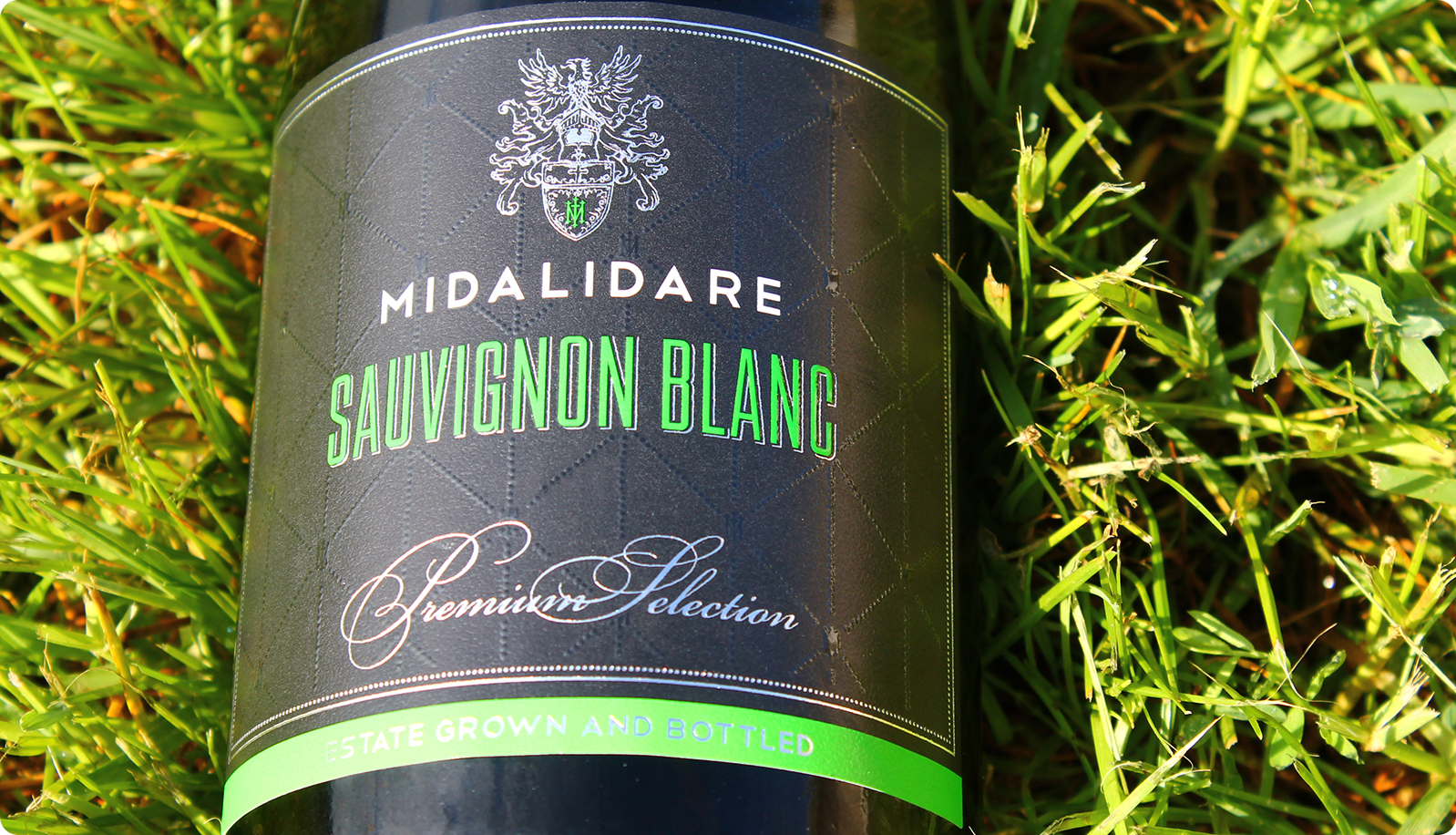
Despite their differences, these wines share a few commonalities white wine enthusiasts adore.
Both Sauvignon Blanc and Pinot Gris originated in France. They are high in acid when made in a dry style. Both can become a lighter, sweeter wine when a winemaker chooses to leave some residual sugar or leave the grapes on the vine a little longer to create a late harvest wine.
Both Pinot Gris and Sauvignon Blanc thrive in cooler wine regions.
- Dryness: Both wines are typically dry, meaning they’re not sweet. They’re all about crisp refreshment, not dessert-in-a-glass vibes.
- Served chilled: For maximum enjoyment, both Pinot Gris and Sauvignon Blanc are best served well-chilled, bringing out their acidity and freshness. Pop them in the fridge for a few hours and get ready for a refreshing sip.
- Perfect for Summer: Whether you’re headed to the pool, brunch, or a sunny picnic, these wines belong in your summer tote bag.
- Crowd-Pleasers: They’re both approachable, easy-drinking, and beloved by wine newbies and connoisseurs alike.
Key Differences Between Sauvignon Blanc and Pinot Gris
- Regions: You can find both types of wine in production in places like Italy, France, and California. Sauvignon Blanc production has migrated south of the equator to regions like Chile, New Zealand, and South Africa. Pinot Gris is a mainstay of many vineyards in Germany and Austria.
- Fermentation and aging: The winemaking process for Sauvignon Blanc and Pinot Gris often differs from one vintner to another. Some types of wine might undergo malolactic fermentation (converting malic acid into lactic acid) in oak barrels, whereas others might follow the Alsatian method (named for Alsace), which sees wine aging in stainless steel.
- Dryness: Both Sauvignon Blanc and Pinot Gris are typically dry white wines, but their dryness depends on the specific wine. Environmental and other conditions can affect the mouthfeel of either type of dry wine. On average, Sauvignon Blanc is drier than Pinot Gris.
- Alcohol content: Most Sauvignon Blanc and Pinot Gris clock in at around 12.5 to 13.5 percent alcohol by volume (ABV). Some winemakers might craft either type to be higher or lower in ABV, but this general range is common.
- Aromas: Sauvignon Blanc’s acidic nature makes it more likely to emit an aroma that is more citrusy or herbaceous than that of Pinot Gris. It is bold, bright, and packed with lime, green apple, and often tropical fruit flavors. By comparison, Pinot Gris has a slightly sweeter scent, light and clean with delicate citrus and pear notes and a dry, crisp finish. Sauvignon Blanc is often more aromatic in a general sense than Pinot Gris.
- Flavor profiles: Both can be dry or sweet wines, depending on the region and production methods. Still, Sauvignon Blanc are light-bodied and prone to high acidity overall. Pinot Gris might taste a little sweeter on average, due to its fruit flavors and the residual sugar left over from the winemaking process. Sauvignon Blanc tends to taste like passion fruit, grapefruit, limes, and lemons, while Pinot Gris tends to taste more like apricots, green apples, pears, and tropical fruits—although variations on these profiles do occur.
- Body and Texture: Pinot Gris leans light-bodied, making it refreshing and smooth. By contrast, Sauvignon Blanc can range from medium to fuller-bodied, particularly when aged in oak, which imparts texture to the wine.
- Food Pairings: Pinot Gris loves lighter fare - seafood, veggies, and summer salads. Sauvignon Blanc can handle bold flavors, herbs, and zippy sauces. The acidic taste of Sauvignon Blanc can balance out smoother cheeses. Buttery shellfish pairs well with a Pinot Gris wine tasting, as do many Italian dishes like pasta.
How to choose between Sauvignon Blanc and Pinot Gris
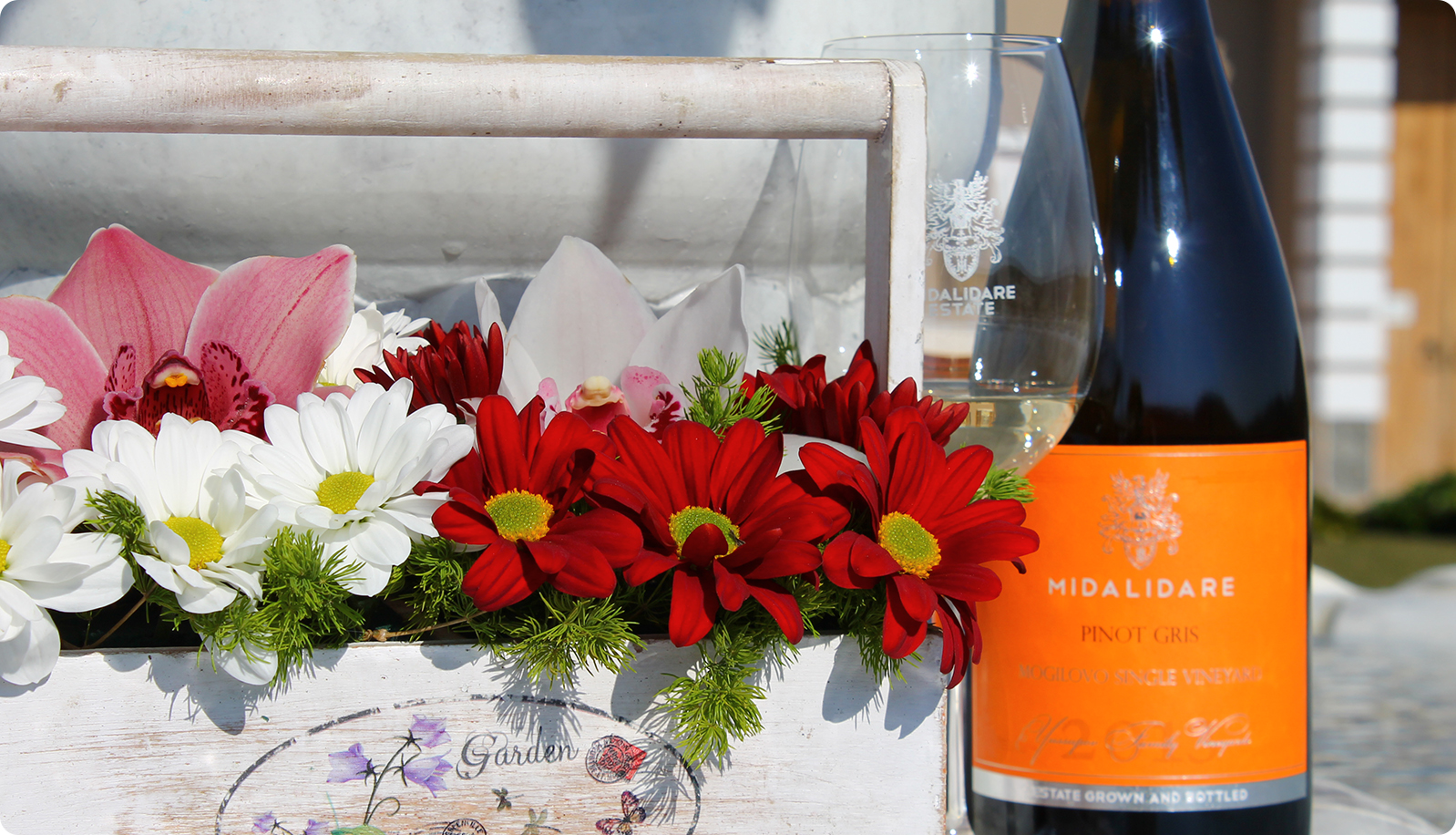
When choosing, it all comes down to your mood (and maybe what’s for dinner).
- Do you want something soft, mellow, and easy to sip while you fold laundry or gossip with friends? Go for Pinot Gris.
- Craving something bright, bold, and packed with personality? Sauvignon Blanc is your girl.
- Pairing with spicy food, tangy sauces, or herbs? Sauvignon Blanc wins. Goat cheese? Sauvignon Blanc wins again. A delicate seafood pasta? Go for the Pinot Gris.
- Need a neutral wine for picky guests? Pinot Gris is safe and steady.
Either way, you can’t go wrong—just let your taste buds lead the way.
Hard to choose between both varieties? Try Synergy
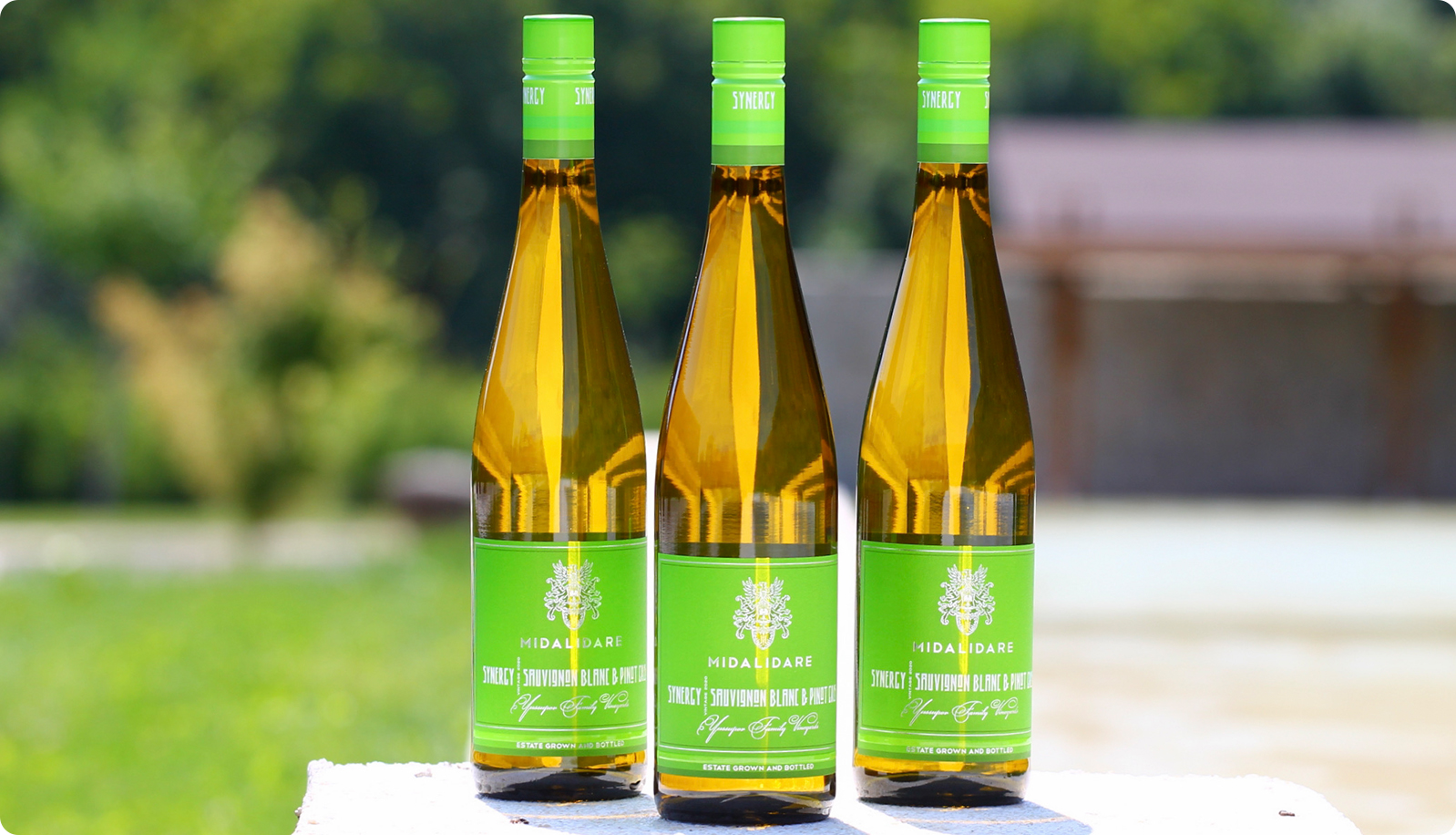
When blended, Sauvignon Blanc and Pinot Gris create a perfectly balanced white wine that combines vibrant, zesty aromatics with a softer, richer texture.
- Aromatic punch: Sauvignon Blanc contributes bold, bright aromatics - passionfruit, lime, gooseberry, and cut grass.
- Builds Body: Pinot Gris provides the weight and texture, rounding out the palate with notes of peach, nectarine, and pear.
- Balances Acidity: Sauvignon Blanc is famously tangy and crisp. Blending in Pinot Gris mellows that sharp edge, resulting in a smoother, highly versatile drinking experience.
Explore our blog
- Blend & Trend: Popular wine blends by Midalidare - Trendy blending styles
- Classic wine blends - Wine Classics from the Old World
- Sauvignon Blanc vs Chardonnay - Two great white varieties side by side
- Aromatic white grapes - Scent explosion in a glass of white wine
- Carbonic Maceration - Fermentation technique in a completely anaerobic atmosphere
- Cane Cut technique - New name for an old tradition
- Vine pruning celebrations around the world - How they celebrate the growing season beginning in different countries
- Malbec vs Tannat - Two great red close relative varieties side by side
- Colours in wine labeling - What do Midalidare monochrome labels tell us about the wines?
- Sparkling Wine Guide: Sparkling winemaking - Methods for sparkling winemaking
- Sparkling Wine Guide: Traditional sparkling winemaking - The Champagne method
- Sparkling Wine Guide: Food pairing - Champagne & Sparkling wine food pairing
- Sparkling Wine Guide: Pas Dosé - Sparkling wine with no added sugar
- Sparkling Wine Guide: Blanc de Noirs - A full-bodied, heady Sparkling
- Sparkling Wine Guide: Blanc de Blancs - Sparkling wine all finesse and lightness
- Sparkling Wine Guide: Non-vintage Brut Style - A sparkling wine for all occasions
- Sparkling Wine Guide: Sparkling Rosé Style - A style of elegance and diversity
- Sparkling Wine Guide: Sparkling wines by ageing - Vintage vs Non-vintage
- Sparkling Wine Guide: Sparkling wines by sweetness scale - How much sugar in sparkling wine
- Sparkling Wine Guide: Sparkling wines by region - Sparkling wine journey around the world
- Sparkling Wine Guide: Oak ageing of sparkling wines - Oak usage in traditional sparkling winemaking
- Marlborough: Wine Region - History, climate, viticulture and sub-regions of Marlborough
- Marlborough: Southern Valleys - The home of Midalidare New Zealand Sauvignon Blanc
- Marlborough: Grapes and Wines - Specifics of the varieties and characteristics of the wines
- Marlborough: Sauvignon Blanc - What sets Marlborough's Sauvignon Blanc apart from other regions?
- Central Otago: Wine region - History, climate, soils and sub-regions of Central Otago
- Central Otago: Cromwell - The home of Midalidare New Zealand Central Otago Stag’s Run Pinot Noir
- Central Otago: Grapes and Wines - Specifics of the varieties and wines characteristics
- Pinot Noir in Central Otago - What sets Central Otago's Pinot Noir apart from other regions?
- Midalidare’s grape varieties: Malbec in a nutshell - Part 1: Essential information about Malbec
- Midalidare’s grape varieties: Syrah in a nutshell - Part 1: Essential information about Syrah
- Midalidare’s grape varieties: Tannat in a nutshell - Part 1: Essential information about Tannat
- Midalidare’s grape varieties: Merlot in a nutshell - Part 1: Essential information about Merlot
- Midalidare’s grape varieties: Mourvedre - Part 1: The variety
- Midalidare’s grape varieties: Sauvignon Blanc in a nutshell - Part 1: Essential information about Sauvignon Blanc
- Midalidare’s grape varieties: Chardonnay in a nutshell - Part 1: Essential information about Chardonnay
- Wine & Glass pairing: Do specific wine glasses make a difference? - Do specific wine glasses make a difference?
- Wine & Glass pairing: Guide to different types of wine glasses with stem - Anatomy - Part 1: Anatomy of a wine glass
- Wine & Glass pairing: Guide to different types of wine glasses with stem - Part 2: Different types of wine glasses
- Wine & Glass pairing: Rose Wine Glasses - Flared Lip Rose Wine Glass
- Wine & Glass pairing: Rose Wine Glasses - Slight Taper Rose Glass
- Wine & Glass pairing: White Wine Glasses - Sauvignon Blanc Wine Glass
- Wine & Glass pairing: White wine glasses - Unoaked Chardonnay Wine Glass
- Wine & Glass pairing: White wine glasses - Оaked Chardonnay Wine Glass
- Wine & Glass pairing: White wine glasses - Riesling Wine Glass
- Wine & Glass pairing: Red wine glasses - Cabernet/Merlot Wine Glass
- Wine & Glass pairing: Sparkling Wine Glasses - Basic types of Champagne and Sparkling wine glasses
- Wine & Glass pairing: Red wine glasses - Old-world style Syrah