
Pinot Noir vs Meunier

Pinot Noir and Meunier are intimately related grapes, but they differ significantly in vineyard behavior, flavor profile, and how they are used. While both are heavily planted in the Champagne region, Pinot Noir is known for structured elegance, while Meunier offers soft, fruit-forward charm.
The story of Pinot Noir
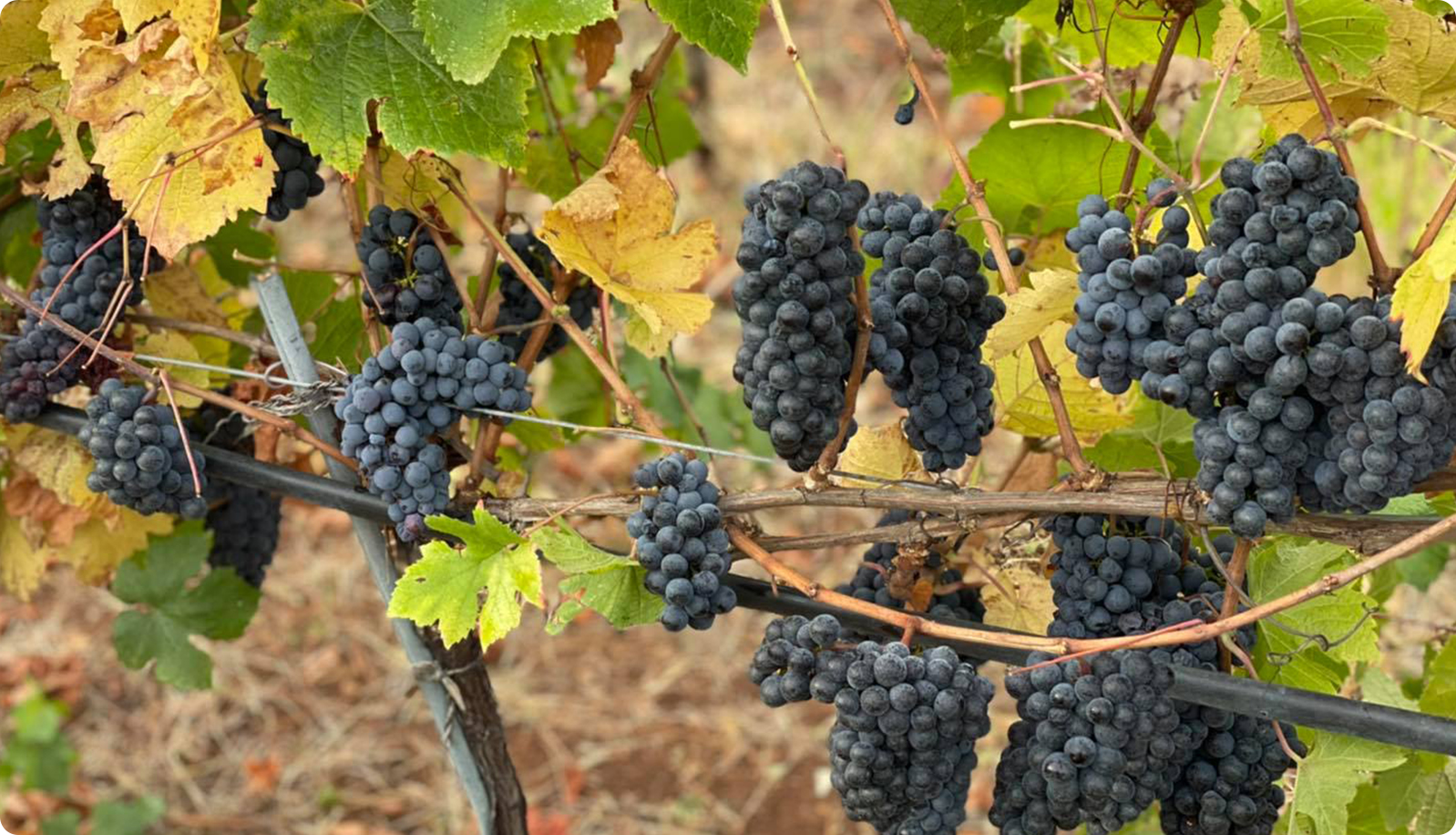
Pinot Noir is a thin-skinned black grape variety that produces light- to medium-bodied wines with vibrant acidity. It's the ballet dancer of red wines: delicate, graceful, and precise. Unlike bolder reds like Cabernet Sauvignon, Pinot Noir wears its heart on its sleeve. It’s known for its transparency, both literally (it’s often paler in color) and figuratively (it vividly expresses the terroir where it’s grown).
The very name "Pinot Noir" derives from the French words "pine" and "black," describing the grape's tight, pinecone-like clusters and dark color. Ampelographic studies suggest that Pinot Noir is a very old variety, with origins dating back to the first century AD. It's believed that the Romans brought the grape with them as they expanded their empire, but the wild ancestors of Pinot Noir probably existed long before.
The story of Meunier
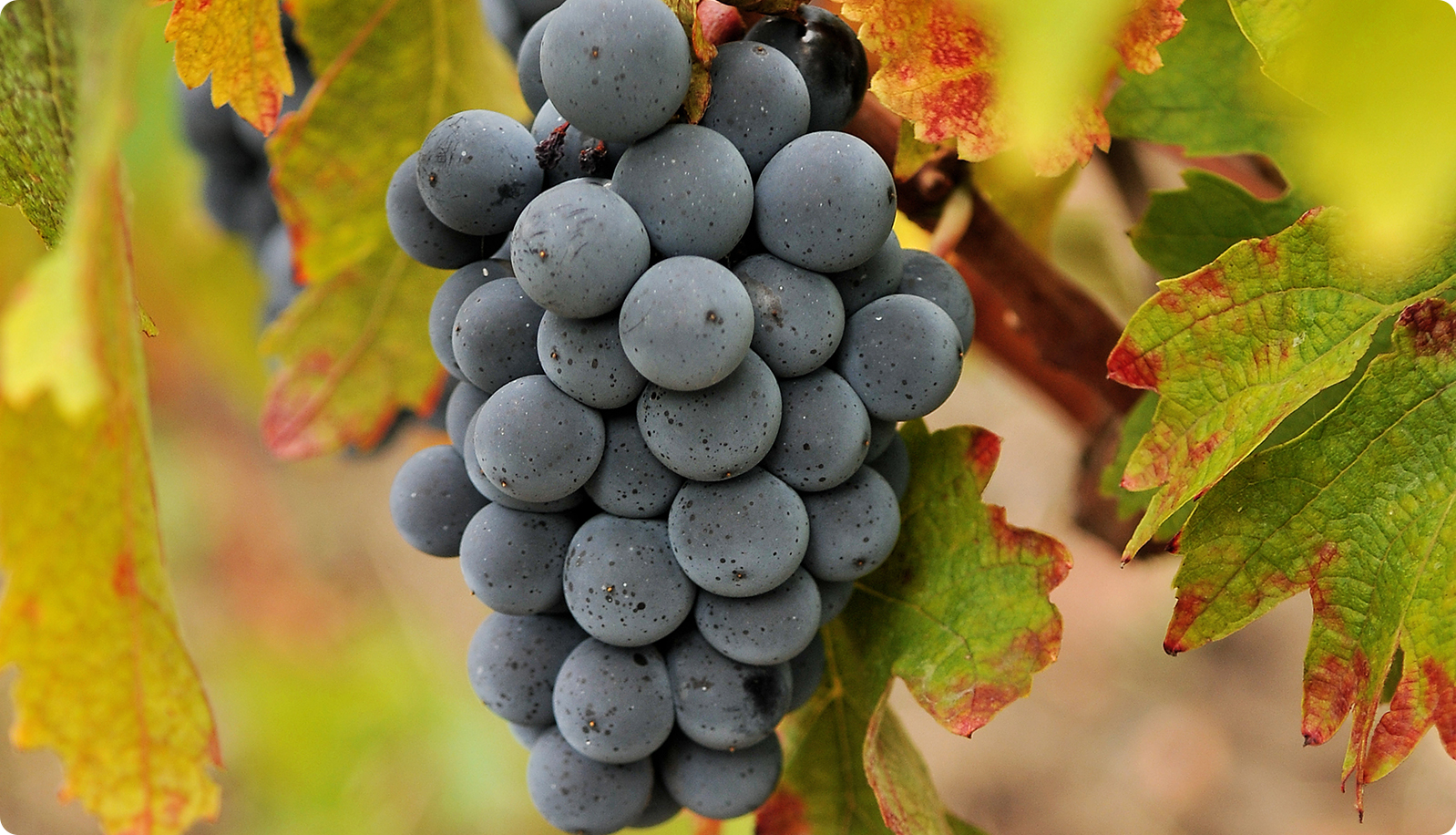
Meunier is French for ‘miller’. A name derived from the appearance of the bottom of the leaf. The underside of the leaf is white and thus looks like it’s been dipped in flour. Blended with other grapes, it helps soften the palate, but Meunier also has its own distinct flavours. It has a lot of similar flavours and aromas to Pinot Noir but has higher acidity with more citrus characters and lighter, less earthy profile. It can also display slightly cigar-smoky flavours. But the surprising thing about such a prevalent grape is how rarely it’s bottled as a single varietal.
For centuries, Meunier was thought to be part of the Pinot family, a colour variant of Pinot Noir, like Pinot Blanc or Pinot Gris. However, in the early 2000s, DNA profiling, conducted by French ampelographers, revealed that Meunier is not a clone or colour mutation of Pinot Noir, but a distinct variety, closely related, but genetically separate.
Similarities between Pinot Noir and Meunier
Ancestors: Both varieties share same ancestors: an original Pinot prototype and Gouais Blanc.
Colour: Both are black grape varieties.
Aromatics: Both varieties showcase fragrant red fruit aromas like red cherry, cranberry, and strawberry, underscored by subtle earthy and spicy nuances.
Food pairings: Because they share such similar taste structures, both wines pair beautifully with rich fish (like salmon), duck, pork, and earthy roasted vegetables.
Differences between Pinot Noir and Meunier
Origin: Unlike Pinot Noir, Meunier is indigenous to the Champagne region. Pinot Noir originates in Burgundy.
Vineyard & Viticulture
Pinot Noir: A notoriously finicky, delicate grape. It buds early, making it highly susceptible to spring frost and rot.
Meunier: Much harder and resilient. It buds later and ripens earlier than Pinot Noir, making it far better suited to cooler, damp climates and frost-prone valleys (like Champagne's Vallée de la Marne).
In the glass
Pinot Noir: Known for its elegance, it has moderate acidity and firm tannins. It features red fruit notes (cherry, strawberry) which evolve into complex, earthy, and forest-floor characteristics with age.
Meunier: Typically, lighter in color and body with slightly higher acidity but lower tannins. It delivers immediate, youthful fruitiness with notes of peaches, tart cherry, and spice.
Their roles in wine
In Sparkling Wine: Both grapes (along with Chardonnay) form the classic "Champagne trio". Pinot Noir provides structure, power, and depth. Meunier brings immediate approachability, softness, and rich fruitiness to blends. When sparkling wine is made entirely from dark grapes, it is called Blanc de Noirs.
As Still Red Wine: Pinot Noir is famous worldwide for producing highly sought-after, complex red wines. Still red wines made from 100% Meunier are quite rare, but offer a bright, fruit-forward, and silky alternative.
| Pinot Noir | Meunier | |
| Vineyard Behavior | Finicky, buds early (vulnerable to frost), and ripens later. | Hardy, buds late (avoids frost), and ripens earlier. |
| Primary Flavors | Red cherry, strawberry, earthy tones, and spice. | Stone fruits (peaches), floral notes, and vibrant red fruit. |
| Structure & Body | Higher tannins, high complexity, and aging potential. | Lower tannins, softer texture, and pronounced acidity. |
| Main Usage | Red table wines and as a structural Champagne component. | Primarily a blending grape for Champagne to add roundness; rarely seen as a still red. |
Midalidare wines from Pinot Noir and Meunier
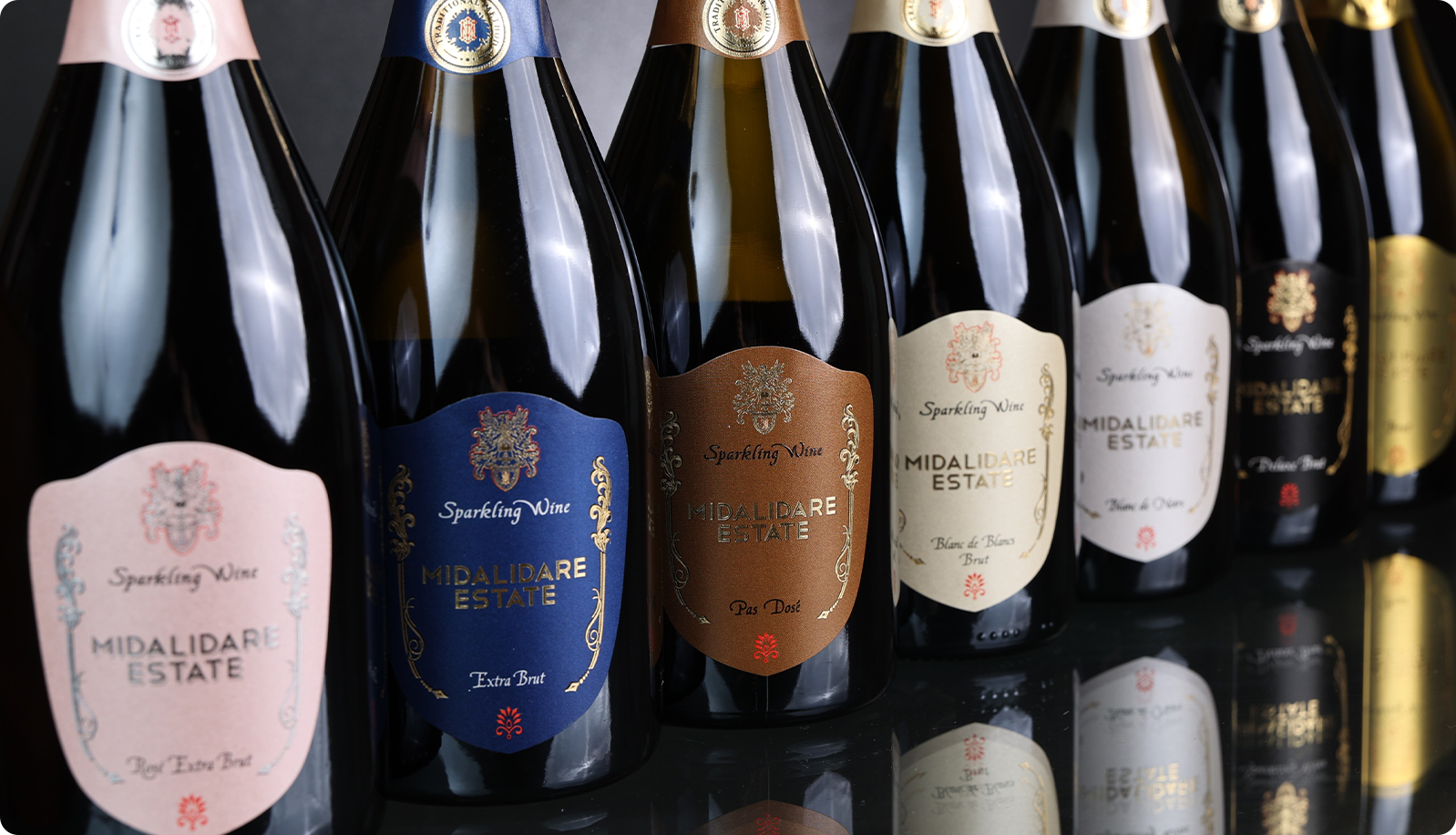
At Midalidare we are growing both Pinot Noir and Meunier. The vines are planted on the organically certified Dabovets vineyard but in slightly different positions. Both varieties are used solely in our traditional method sparkling winemaking.
Our bubblies of Pinot Noir and Meunier blend are:
Our bubblies containing only Pinot Noir (blended with Chardonnay) is:
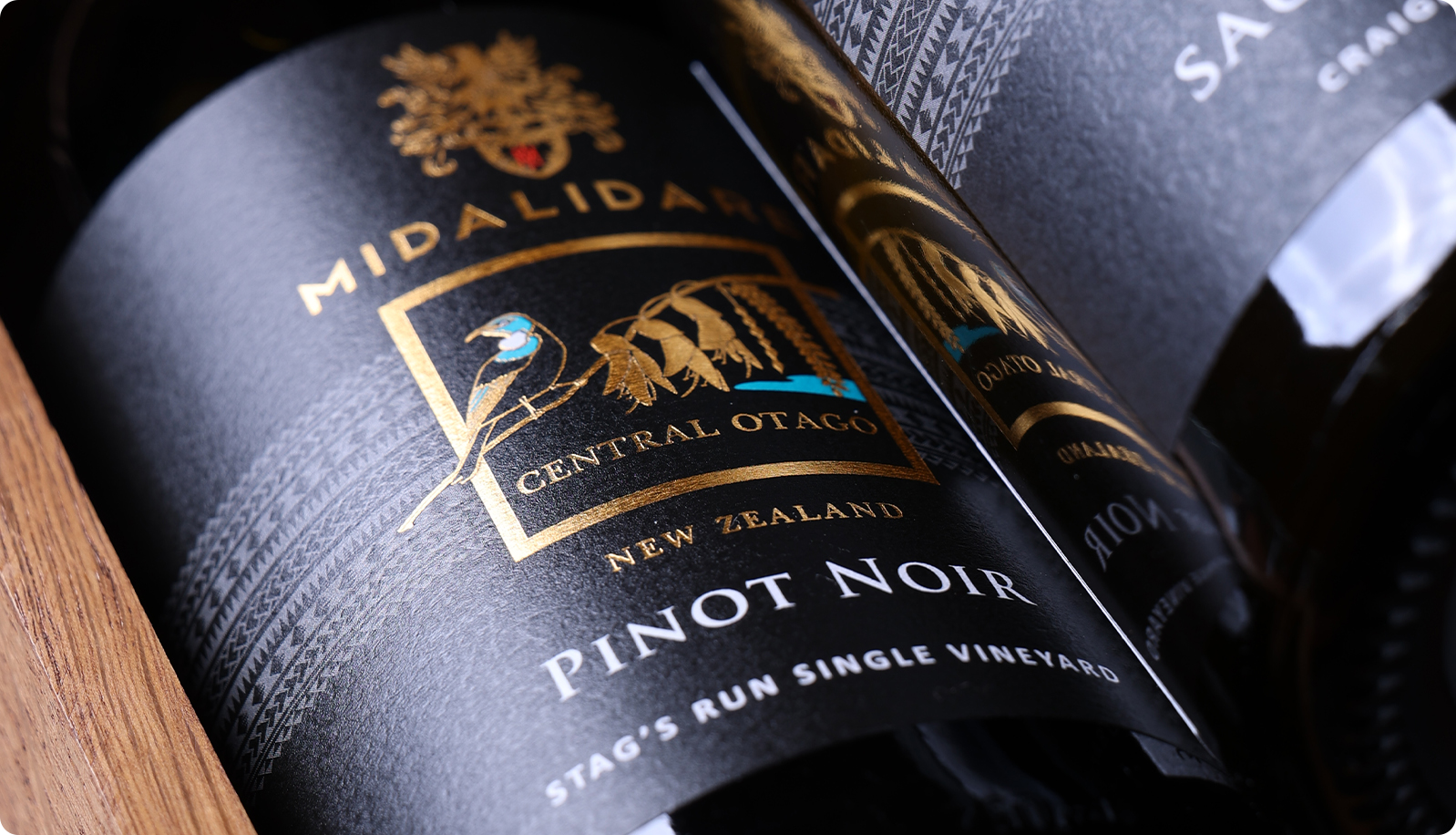
On the other side of the world, in New Zealand, we are managing a very special vineyard planted with a very special Pinot Noir clone. Located on Lake Dunstan's steep bank, in Cromwell wine region of Central Otago, the Stag’s Run vineyard is home of Midalidare NZ Pinot Noir: our lovely New Zealand red wine, created of grapes from 667 Dijon clone. A structured, dense wine, but with strong aromas of ripe fruit. This Dijone branch is not typical of New Zealand and wines with a similar profile can rarely be found on the market.
Explore our blog
- Versatile Sauvignon Blanc - Sauvignon Blanc: Versatility from Vineyard to Bottle
- Sauvignon Blanc vs Pinot Gris - Crisp White Wine Excellence
- Colours in wine labeling - What do Midalidare monochrome labels tell us about the wines?
- Malbec vs Tannat - Two great red close relative varieties side by side
- Vine pruning celebrations around the world - How they celebrate the growing season beginning in different countries
- Cane Cut technique - New name for an old tradition
- Carbonic Maceration - Fermentation technique in a completely anaerobic atmosphere
- Aromatic white grapes - Scent explosion in a glass of white wine
- Sauvignon Blanc vs Chardonnay - Two great white varieties side by side
- Classic wine blends - Wine Classics from the Old World
- Sparkling Wine Guide: Oak ageing of sparkling wines - Oak usage in traditional sparkling winemaking
- Sparkling Wine Guide: Sparkling wines by region - Sparkling wine journey around the world
- Sparkling Wine Guide: Sparkling wines by sweetness scale - How much sugar in sparkling wine
- Sparkling Wine Guide: Sparkling wines by ageing - Vintage vs Non-vintage
- Sparkling Wine Guide: Sparkling Rosé Style - A style of elegance and diversity
- Sparkling Wine Guide: Non-vintage Brut Style - A sparkling wine for all occasions
- Sparkling Wine Guide: Blanc de Blancs - Sparkling wine all finesse and lightness
- Sparkling Wine Guide: Blanc de Noirs - A full-bodied, heady Sparkling
- Sparkling Wine Guide: Pas Dosé - Sparkling wine with no added sugar
- Sparkling Wine Guide: Food pairing - Champagne & Sparkling wine food pairing
- Sparkling Wine Guide: Traditional sparkling winemaking - The Champagne method
- Sparkling Wine Guide: Sparkling winemaking - Methods for sparkling winemaking
- Marlborough: Wine Region - History, climate, viticulture and sub-regions of Marlborough
- Marlborough: Southern Valleys - The home of Midalidare New Zealand Sauvignon Blanc
- Marlborough: Grapes and Wines - Specifics of the varieties and characteristics of the wines
- Marlborough: Sauvignon Blanc - What sets Marlborough's Sauvignon Blanc apart from other regions?
- Central Otago: Wine region - History, climate, soils and sub-regions of Central Otago
- Central Otago: Cromwell - The home of Midalidare New Zealand Central Otago Stag’s Run Pinot Noir
- Central Otago: Grapes and Wines - Specifics of the varieties and wines characteristics
- Pinot Noir in Central Otago - What sets Central Otago's Pinot Noir apart from other regions?
- Midalidare’s grape varieties: Meunier in a nutshell - Part 1: Essential information about Meunier
- Midalidare’s grape varieties: Pinot Noir in a nutshell - Part 1: Essential information about Pinot Noir
- Midalidare’s grape varieties: Malbec in a nutshell - Part 1: Essential information about Malbec
- Midalidare’s grape varieties: Syrah in a nutshell - Part 1: Essential information about Syrah
- Midalidare’s grape varieties: Tannat in a nutshell - Part 1: Essential information about Tannat
- Midalidare’s grape varieties: Merlot in a nutshell - Part 1: Essential information about Merlot
- Midalidare’s grape varieties: Mourvedre - Part 1: The variety
- Midalidare’s grape varieties: Sauvignon Blanc in a nutshell - Part 1: Essential information about Sauvignon Blanc
- Midalidare’s grape varieties: Chardonnay in a nutshell - Part 1: Essential information about Chardonnay
- Wine & Glass pairing: Red wine glasses - Old-world style Syrah
- Wine & Glass pairing: Sparkling Wine Glasses - Basic types of Champagne and Sparkling wine glasses
- Wine & Glass pairing: Red wine glasses - Cabernet/Merlot Wine Glass
- Wine & Glass pairing: White wine glasses - Riesling Wine Glass
- Wine & Glass pairing: White wine glasses - Оaked Chardonnay Wine Glass
- Wine & Glass pairing: White wine glasses - Unoaked Chardonnay Wine Glass
- Wine & Glass pairing: White Wine Glasses - Sauvignon Blanc Wine Glass
- Wine & Glass pairing: Rose Wine Glasses - Slight Taper Rose Glass
- Wine & Glass pairing: Rose Wine Glasses - Flared Lip Rose Wine Glass
- Wine & Glass pairing: Guide to different types of wine glasses with stem - Part 2: Different types of wine glasses
- Wine & Glass pairing: Guide to different types of wine glasses with stem - Anatomy - Part 1: Anatomy of a wine glass
- Wine & Glass pairing: Do specific wine glasses make a difference? - Do specific wine glasses make a difference?
Used sources
Bestswines.com, Glassofbubbly.com, Champagnetuesday.com, Pfwi.com.au, Fizzyvines.com, Vineandbubble.com, Lacrema.com, Vintnerproject.com, Chateaudepommard.com, Winefolly.com, Forbes.com, Thehiddensea.com.au, Wineenthusiast.com, Vintageroots.co.uk, Onthetrail.klwines.com, Midalidare.bg, Shop.midalidare.bg