
Midalidare’s grape varieties: Pinot Noir - The variety and the terroirs

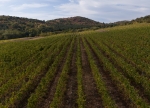
Pinot Noir is a thin-skinned black grape variety that produces light- to medium-bodied wines with vibrant acidity. It's the ballet dancer of red wines: delicate, graceful, and precise. Unlike bolder reds like Cabernet Sauvignon, Pinot Noir wears its heart on its sleeve. It’s known for its transparency, both literally (it’s often paler in color) and figuratively (it vividly expresses the terroir where it’s grown). But make no mistake: this grape is finicky. Pinot Noir’s sensitivity to climate and soil, or terroir, makes it one of the most challenging—and rewarding—grapes to grow. Pinot Noir thrives in cooler climates and demands meticulous care from winemakers, but when grown in the right place, it delivers wines with unmatched elegance and finesse. It’s no wonder winemakers are smitten.
What is Pinot Noir?
Pinot Noir is a grape variety of the species Vitis vinifera hailing from France. It’s one of France’s oldest grapes, cultivated long ago by the Cistercian monks in Burgundy. Today, collectors prize Pinot Noir for its finesse and age-worthiness, especially from the most famous vineyards in Burgundy. Due to its popularity and difficulty growing, it’s one of the world’s most expensive wines.
Where does Pinot Noir come from?
Pinot Noir originated in Burgundy, France where it is produced as a single varietal wine. Unlike other red grapes, Pinot Noir is rarely blended. As the wines of Burgundy rose in fame and price, winemakers around the world sought to emulate the region’s success. This led to plantings of Pinot Noir throughout Europe and the New World. However, Pinot Noir does better in cooler climates as its trademark acidity, delicacy and finesse disappear in warmer climates and hot weather. Today, the countries producing the finest Pinot Noir are France, Switzerland, Germany, Austria, Bulgaria, New Zealand, Australia, the United States (California and Oregon) and Chile. Because of its widespread popularity, Pinot Noir is considered an “international” variety.
Pinot Noir has a rich and deeply rooted history, with its origins tracing back over 1,000 years to Burgundy, France, where monks tended the vineyards and documented how the grape expressed itself differently across the various parcels of land, giving rise to the concept of terroir.
By the medieval period, Burgundy had already established itself as a center for viticulture. The Cistercian and Cluniac monks, who held vast swaths of vineyards, noticed the distinct quality difference in wine produced from different plots. They diligently classified these vineyards and laid the groundwork for the concept of "terroir," a term still fundamental to understanding wine today. The monks revered Pinot Noir, valuing its ability to express the subtle nuances of each vineyard site. This classification system eventually evolved into Burgundy's famous "cru" hierarchy, which denotes the quality and potential of its wines based on geology, microclimate, and historical reputation. At the pinnacle are the "Grands Crus" sites, such as the renowned Romanée-Conti, known for producing some of the world's most sought-after and expensive Pinot Noir wines.
Moving into the Renaissance era, Burgundy wine, particularly Pinot Noir, became a favorite among royals and aristocrats. Louis XIV, the Sun King, was said to have been prescribed Burgundy wine by his physician for its health benefits. During this period, Burgundy wine was often more highly valued than Bordeaux, a testament to the enduring prestige of Pinot Noir.
The 19th century brought both innovation and calamity. On one hand, the winemakers of Burgundy continued to refine their viticultural and winemaking practices, further distinguishing their unique style of Pinot Noir - perfumed, light to medium-bodied, yet intensely complex. On the other hand, the phylloxera crisis devastated vineyards across Europe, forever altering the landscape of viticulture.
Burgundy's Pinot Noir vines were not spared, leading to massive replanting efforts in the late 19th and early 20th centuries. This was a critical juncture in the history of Pinot Noir as it led to the cultivation of various Pinot Noir clones, a subject of great interest in modern ampelography. Each clone has specific attributes, including resistance to certain diseases, yield levels, and distinct aromatic and flavor profiles. Notable clones from Burgundy include Dijon clones such as 115, 667, and 777, all widely planted around the world today.
The 20th century brought a global recognition of Burgundy Pinot Noir. After two world wars, the Burgundy region began to recover, and with it, the quality and reputation of its Pinot Noir soared.
Amid the 21st-century landscape, Pinot Noir is still at the forefront of premium winemaking. During the 1800s, Pinot Noir made its way from Europe to regions like California, Oregon, New Zealand, and beyond. These areas embraced the grape's potential and created wines that faithfully told the story of their local terroir. Today, Pinot Noir is a global darling, but always with a Burgundian soul.
Ancestry
The ongoing scientific study of Pinot Noir has also yielded intriguing findings. Genomic analysis has confirmed Pinot Noir as one of the oldest grape varieties, essentially a great-grandparent to many other varieties through natural crossings. For instance, it's believed to have crossed with Gouais Blanc, a grape brought to France by the Romans, to parent varieties like Chardonnay and Gamay.
Additionally, studies of Pinot Noir clones have unveiled significant genetic instability, leading to a proliferation of distinct clonal variations. This genomic fluidity has perhaps contributed to Pinot Noir's unique ability to mutate and adapt, engendering an array of styles and expressions depending on the specifics of where it is grown.
Pinot Noir terroirs
Pinot Noir thrives in cooler climates, and its terroir-driven nature means wines from different regions offer distinct flavor profiles.
Burgundy: Home to the most prestigious Pinot Noirs, Burgundy is all about earth-driven and elegant wines - complex, and ethereal. Key flavours are mushrooms, forest floor, and tart cherry notes, all wrapped in a silky structure.
Gevrey-Chambertin: Nestled in the Côte de Nuits, Gevrey-Chambertin is celebrated for its robust and structured Pinot Noir, influenced by the limestone-rich soils. Wines with complex flavors of dark cherry, black currant, and a signature earthiness. Aging in oak barrels contributes layers of spice and can add a hint of smoke.
Chambolle-Musigny: Also located in the Côte de Nuits, Chambolle-Musigny is renowned for its elegant and aromatic Pinot Noir. The soils here comprise limestone and clay, favoring wines with a charming blend of finesse and power.
Pommard: Situated in the Côte de Beaune, Pommard is recognized for its full-bodied and tannic Pinot Noir, distinct from its more delicate neighbors. The vineyards’ clay and iron-rich soil bestow a profound intensity to the wines. Expect robust flavors of black cherry, plum, and an earthy complexity. The use of oak in aging imparts a characteristic note of spice and sometimes a touch of cocoa or coffee.
Other regions in France for Pinot Noir wines include the Loire Valley, Alsace and the Languedoc.
While in France, it is essential to mention Champagne, where Pinot Noir is the backbone of great sparkling Non-vintage Brut cuvees, Blanc de Noirs and Classic Roses.
What to expect: German Pinot Noir, aka Spätburgunder, is very similar in style to Burgundian Pinot — a mixture of fresh red cherries and savory notes. It can also offer some great value when compared to their French counterparts.
Baden: Baden is the southernmost wine region in Germany, and it’s also the warmest, creating wines that are often full-bodied, ripe, and complex. Expect baked cherry flavors, smooth tannins, and refreshing acidity.
Ahr: Despite its small size and northerly location, Ahr is known for its high-quality Pinot Noir. The region’s steep vineyards and slate soils create a unique microclimate that is conducive to producing wines that are often elegant and structured. Alcohol and body levels are higher here, but there’s elegance and freshness, too.
What to expect: Vibrant fruit-forward style with characteristic earthiness, marked by the influence of the country’s unique terroir. New Zealand’s most prestigious Pinot Noir vineyards are scattered across the country’s two islands, where the temperate maritime climate, long sunshine hours, and diverse soil profiles create ideal conditions for this varietal.
Central Otago: Situated in the southern part of the South Island, Central Otago is celebrated for its rich and robust Pinot Noir, which benefits from the dramatic diurnal temperature swings. Expect vibrant flavors of red and dark berries, wild thyme, and a distinct minerality, often with good tannic structure.
Marlborough: Located in the northeastern part of the South Island, Marlborough is best known for its Sauvignon Blanc. However, its Pinot Noir, particularly from the Southern Valleys, has been gaining a reputation for its concentration and structure. Expect bright flavors of red cherries, plums, and a touch of earthy spice.
Martinborough: Nestled at the southern end of the North Island, Martinborough’s small-scale vineyards produce top-quality Pinot Noir. Its climate, marked by cool, windy conditions, produces wines with a balance of elegance and power. Expect complex flavors of dark cherry, plum, and a notable savory undertone.
The USA has Pinot Noir growing everywhere, but look to the cooler regions — think the Pacific Coast and northern areas — to find some of the best stuff. US versions tend to be more fruit-forward and lush than Old World examples.
California: Known for fruit-forward, lush expressions, regions like Anderson Valley, Sonoma Coast, and Russian River Valley produce fuller-bodied Pinots with notes of ripe strawberries, cherries, and vanilla. California Pinot Noirs are bigger, lush, and more fruit-forward thanks to the extra sunshine and heat. Look for flavors ranging from sweet black cherry to black raspberry, and secondary aromas of vanilla, clove, and caramel.
Oregon: Pinot Noir from Oregon, especially Willamette Valley, strikes a balance between Old World subtlety and New World fruitiness, with earthy undertones, red fruit flavors, and fresh acidity. Oregon Pinot Noir is usually a few steps lighter in color and texture than ones from California, and it’s usually more tart. Expect cranberry, Bing cherry fruit flavors with secondary aromas of truffle mushrooms and sometimes even a green dandelion stem flavor. Oregon Pinots are often the closest in style to Burgundy.
Pinot Noir is grown in Argentina along the Rio Negro River and is famous for its black cherry and spice-heavy flavours. In Chile, the coastal area of the Casablanca Valley is well suited to Pinot Noir production.
Bulgaria
Pinot Noir from Bulgaria is recognized for its fine and delicate character, combining mountain freshness and southern ripeness. Experts define the terroir in Bulgaria as exceptionally suitable for this noble and capricious variety.
While the Thracian Lowlands offer sunny days and warmer conditions, the hilly regions near the Balkan Mountains and the Black Sea (such as Northeastern Bulgaria) provide a cooler climate. This allows the grapes to retain their natural acids and aromatic profiles inherent in classic Pinot Noir.
Thracian Lowlands is also the home of the Midalidare Sparkling wines, produced from Pinot Noir. The land of Mogilovo village offers excellent terroir for variety and the grapes are used solely for Midalidare’s traditional sparkling winemaking.
- Midalidare’s grape varieties: Pinot Noir in a nutshell - Part 1: Essential information about Pinot Noir
- Midalidare’s grape varieties: Pinot Noir – Wines & winemaking - Part 3: Pinot Noir – Styles of wines and winemaking techniques
- Midalidare’s grape varieties: Pinot Noir - Wine & dine - Part 4: How to serve, store and pair Pinot Noir wine with food
Explore our blog
- Blend & Trend: Popular wine blends by Midalidare - Trendy blending styles
- Classic wine blends - Wine Classics from the Old World
- Sauvignon Blanc vs Chardonnay - Two great white varieties side by side
- Aromatic white grapes - Scent explosion in a glass of white wine
- Carbonic Maceration - Fermentation technique in a completely anaerobic atmosphere
- Cane Cut technique - New name for an old tradition
- Vine pruning celebrations around the world - How they celebrate the growing season beginning in different countries
- Malbec vs Tannat - Two great red close relative varieties side by side
- Colours in wine labeling - What do Midalidare monochrome labels tell us about the wines?
- Sauvignon Blanc vs Pinot Gris - Crisp White Wine Excellence
- Versatile Sauvignon Blanc - Sauvignon Blanc: Versatility from Vineyard to Bottle
- Sparkling Wine Guide: Sparkling winemaking - Methods for sparkling winemaking
- Sparkling Wine Guide: Traditional sparkling winemaking - The Champagne method
- Sparkling Wine Guide: Food pairing - Champagne & Sparkling wine food pairing
- Sparkling Wine Guide: Pas Dosé - Sparkling wine with no added sugar
- Sparkling Wine Guide: Blanc de Noirs - A full-bodied, heady Sparkling
- Sparkling Wine Guide: Blanc de Blancs - Sparkling wine all finesse and lightness
- Sparkling Wine Guide: Non-vintage Brut Style - A sparkling wine for all occasions
- Sparkling Wine Guide: Sparkling Rosé Style - A style of elegance and diversity
- Sparkling Wine Guide: Sparkling wines by ageing - Vintage vs Non-vintage
- Sparkling Wine Guide: Sparkling wines by sweetness scale - How much sugar in sparkling wine
- Sparkling Wine Guide: Sparkling wines by region - Sparkling wine journey around the world
- Sparkling Wine Guide: Oak ageing of sparkling wines - Oak usage in traditional sparkling winemaking
- Marlborough: Wine Region - History, climate, viticulture and sub-regions of Marlborough
- Marlborough: Southern Valleys - The home of Midalidare New Zealand Sauvignon Blanc
- Marlborough: Grapes and Wines - Specifics of the varieties and characteristics of the wines
- Marlborough: Sauvignon Blanc - What sets Marlborough's Sauvignon Blanc apart from other regions?
- Central Otago: Wine region - History, climate, soils and sub-regions of Central Otago
- Central Otago: Cromwell - The home of Midalidare New Zealand Central Otago Stag’s Run Pinot Noir
- Central Otago: Grapes and Wines - Specifics of the varieties and wines characteristics
- Pinot Noir in Central Otago - What sets Central Otago's Pinot Noir apart from other regions?
- Midalidare’s grape varieties: Malbec in a nutshell - Part 1: Essential information about Malbec
- Midalidare’s grape varieties: Syrah in a nutshell - Part 1: Essential information about Syrah
- Midalidare’s grape varieties: Tannat in a nutshell - Part 1: Essential information about Tannat
- Midalidare’s grape varieties: Merlot in a nutshell - Part 1: Essential information about Merlot
- Midalidare’s grape varieties: Mourvedre - Part 1: The variety
- Midalidare’s grape varieties: Sauvignon Blanc in a nutshell - Part 1: Essential information about Sauvignon Blanc
- Midalidare’s grape varieties: Chardonnay in a nutshell - Part 1: Essential information about Chardonnay
- Wine & Glass pairing: Do specific wine glasses make a difference? - Do specific wine glasses make a difference?
- Wine & Glass pairing: Guide to different types of wine glasses with stem - Anatomy - Part 1: Anatomy of a wine glass
- Wine & Glass pairing: Guide to different types of wine glasses with stem - Part 2: Different types of wine glasses
- Wine & Glass pairing: Rose Wine Glasses - Flared Lip Rose Wine Glass
- Wine & Glass pairing: Rose Wine Glasses - Slight Taper Rose Glass
- Wine & Glass pairing: White Wine Glasses - Sauvignon Blanc Wine Glass
- Wine & Glass pairing: White wine glasses - Unoaked Chardonnay Wine Glass
- Wine & Glass pairing: White wine glasses - Оaked Chardonnay Wine Glass
- Wine & Glass pairing: White wine glasses - Riesling Wine Glass
- Wine & Glass pairing: Red wine glasses - Cabernet/Merlot Wine Glass
- Wine & Glass pairing: Sparkling Wine Glasses - Basic types of Champagne and Sparkling wine glasses
- Wine & Glass pairing: Red wine glasses - Old-world style Syrah